technology••5 min read

Engineers Just Built a Portable Quantum Computer Powered by Diamonds

Quantum computing has finally left the super-cooled lab and moved into a portable form factor. Using lab-grown, flawed diamonds, researchers have created a system that runs at room temperature and connects to standard power grids.

Engineers Just Built a Portable Quantum Computer Powered by Diamonds

Quantum Computing Goes Portable

For years, the promise of quantum computing has been tethered to massive, energy-hungry refrigerators kept at temperatures colder than deep space. That paradigm is shifting. Engineers have successfully developed the world’s first portable quantum computer, a device that operates at room temperature and can be plugged directly into a standard power outlet.

Unlike traditional systems that require complex cryogenic cooling to maintain stability, this new architecture utilizes lab-made diamonds. By leveraging 'flawed' diamonds containing nitrogen-vacancy (NV) centers, researchers have created a stable environment for more than 10 qubits, allowing for a compact design that fits into a standard server rack.
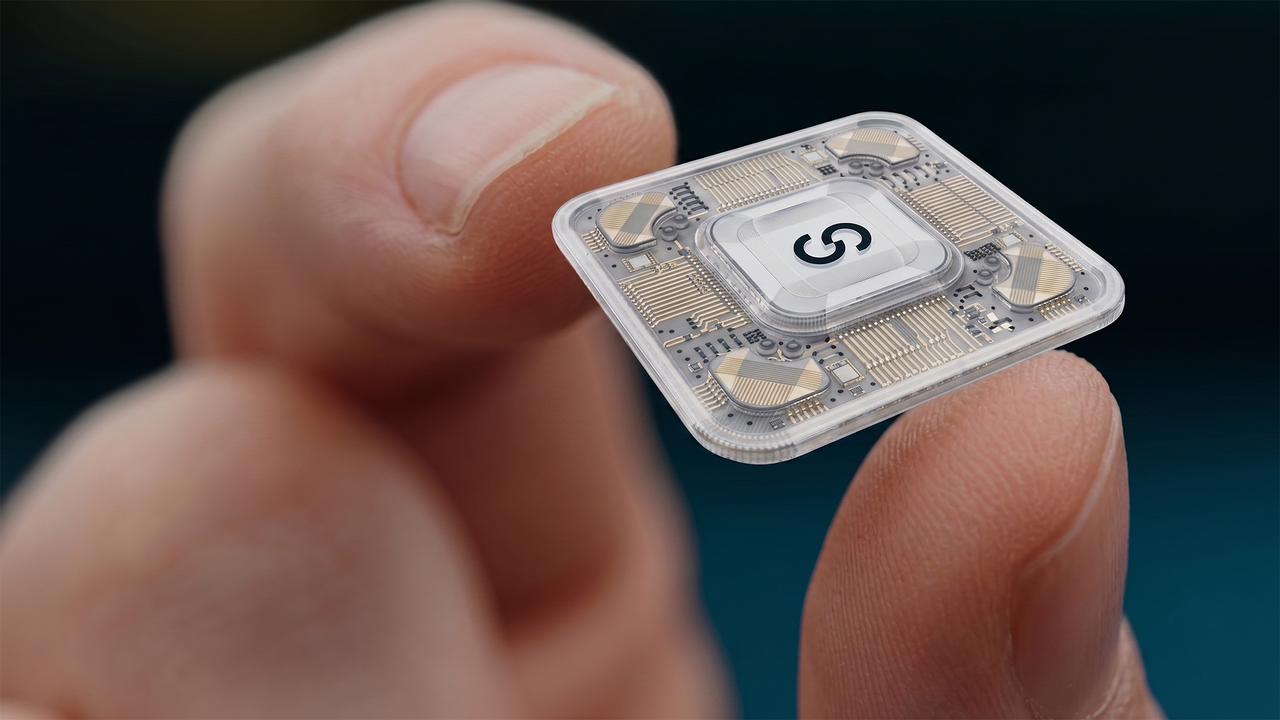
The portable quantum system fits within a standard server rack, marking a major milestone for decentralized quantum hardware.

The Science Behind Diamond-Based Qubits

The breakthrough relies on the unique properties of diamond crystal lattices. When nitrogen atoms are introduced to replace carbon in the lattice, they create NV centers. These defects act as stable, controllable qubits that remain functional without needing near-absolute-zero temperatures.

  • Room-temperature operation: Eliminates the need for liquid helium or dilution refrigerators.
  • Portable form factor: Fits in a standard server rack, making it deployable in office environments.
  • Efficiency: Powered by a typical electrical grid connection.
  • Scalability: Utilizes bottom-up fabrication techniques to manage precise atomic structures.

Diamond is the only practical material for mass deployable quantum devices.

— Quantum Brilliance

What This Means for the Future of Computing

The ability to run quantum operations outside of a specialized lab changes the deployment trajectory for the technology. Startups and deep-tech companies like SaxonQ and Quantum Brilliance are already working to integrate these diamond-based processors into existing computing and sensing infrastructure. By making quantum hardware 'mass-deployable,' the industry aims to free computing from the constraints of centralized, high-maintenance supercomputers.

Key Takeaways

  • New quantum computers operate at room temperature, removing the need for massive cooling systems.
  • The technology utilizes nitrogen-vacancy (NV) centers found in lab-made diamonds as qubits.
  • The units are small enough to fit inside a standard server rack and use regular electrical outlets.
  • This shift enables the mass deployment of quantum systems for commercial and research applications.
  • Leading innovators in this space are leveraging bottom-up fabrication to ensure atomic-scale precision.

FAQ

How does a diamond-based quantum computer work?

It uses lab-grown diamonds with specific atomic defects, known as nitrogen-vacancy (NV) centers, which act as qubits. These centers can be manipulated at room temperature.

Does this system need special cooling?

No. One of the primary advantages of this new diamond-based architecture is that it functions at room temperature, unlike traditional quantum computers.

Is this computer actually portable?

Yes. The current systems are designed to fit into standard server racks and plug into regular electrical outlets, making them significantly more mobile than previous quantum setups.

Who is developing this technology?

Companies like Quantum Brilliance and SaxonQ, along with various research consortia, are currently spearheading the development of mobile, diamond-based quantum processors.

Related Videos

Quantum Computers Explained: How Quantum Computing Works

Science ABC

Quantum Computing Explained by a Retired Microsoft Engineer

Dave's Garage

Quantum Computers: Explained VISUALLY

Lukas's Lab

Sources