A Digital Infrastructure Crisis
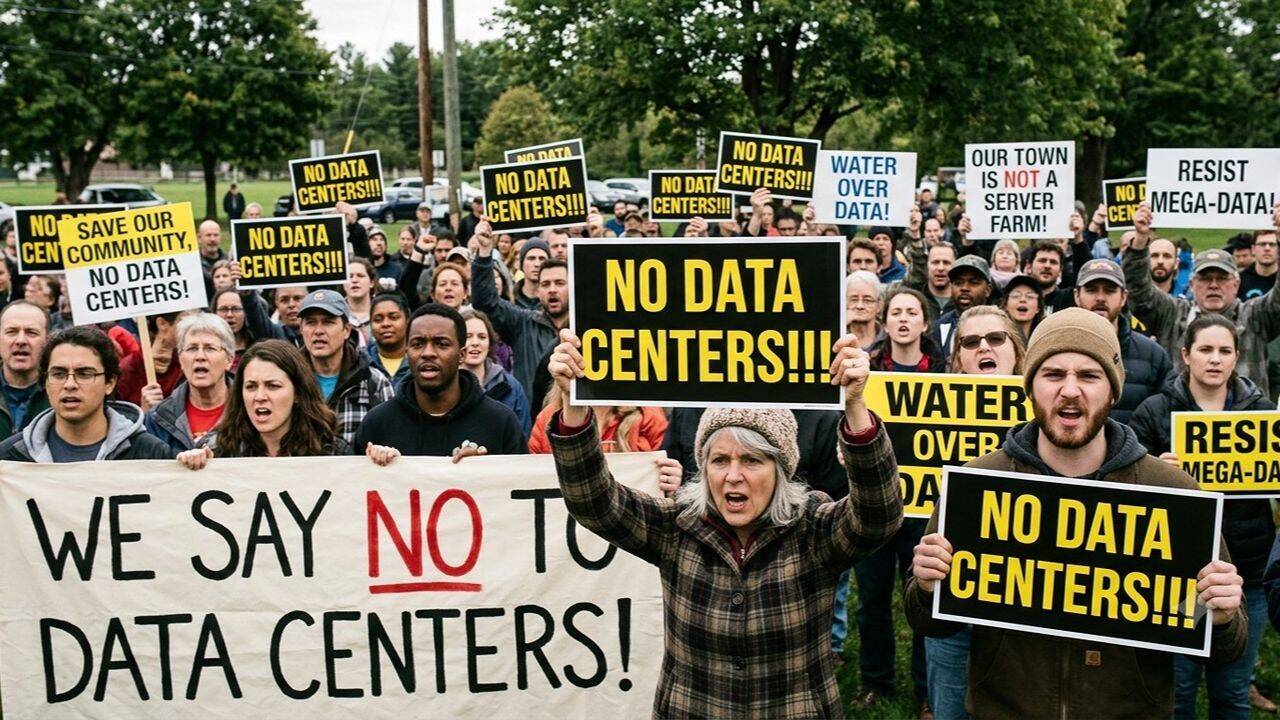
The promise of generative AI has ushered in a gold rush for computing power, but it is leaving an increasingly heavy footprint on the physical world. As tech giants scramble to build massive data centers to house the hardware necessary for advanced AI models, local residents from Northern Virginia to London are sounding the alarm. What was once seen as a quiet engine of the internet is now being viewed by many as a direct threat to local resources.
The Environmental Toll of AI
The issue stems from the sheer scale of modern AI architecture. Cornell researchers estimate that by 2030, the current trajectory of AI growth could add 24 to 44 million metric tons of CO2 annually to the atmosphere—the equivalent of putting up to 10 million additional cars on the road. Beyond carbon emissions, these facilities are massive consumers of water, which is required for cooling high-performance server hardware.
- Energy Demand: Data centers accounted for 60% of electricity growth in the building sector in 2024.
- Water Usage: Massive quantities of water are required for cooling systems, often straining local municipal supplies.
- Grid Strain: The intense energy requirements threaten to overwhelm local power grids, potentially raising utility costs for residents.
- Noise Pollution: Constant operation of cooling fans and mechanical systems has become a quality-of-life issue for nearby neighborhoods.
Tension Between Growth and Sustainability
In regions like Dublin and Northern Virginia, community groups have become increasingly organized, staging protests against new developments. They argue that the environmental cost is not being fairly distributed. While the benefits of AI are global, the negative externalities—higher electricity bills, water depletion, and noise—are felt most acutely by those living in the shadow of these industrial-scale facilities.
Even if each kilowatt-hour gets cleaner, total emissions can rise if AI demand grows faster than the grid decarbonizes. The solution is to accelerate the clean-energy transition in the same places where AI computing is expanding.
— Researchers at Cornell University
What Comes Next?
Governments are now caught in a balancing act, attempting to foster digital growth while answering to constituents concerned about their future. Experts suggest that unless the industry significantly accelerates its clean-energy transition and optimizes cooling efficiency, the path toward a 'smarter' AI future may lead to an unsustainable ecological overshoot. The growing grassroots resistance suggests that for tech companies, the days of building data centers without local scrutiny are coming to an end.