technology••6 min read

Quantum Computing vs. Blockchain: Separating Myths From Reality

As quantum computing advances, concerns about its potential to compromise blockchain security have reached a fever pitch. We break down the real risks to your digital assets and the defensive measures currently being built to counter them.

Quantum Computing vs. Blockchain: Separating Myths From Reality

The Quantum Question: A Looming Threat?

Cryptocurrencies are often the first target mentioned in discussions about quantum computing. Because blockchains rely on cryptographic standards to secure transactions and prove ownership, they represent a high-value 'honey pot' for potential attackers. As quantum hardware scales, the question is no longer if it will impact the digital landscape, but when.
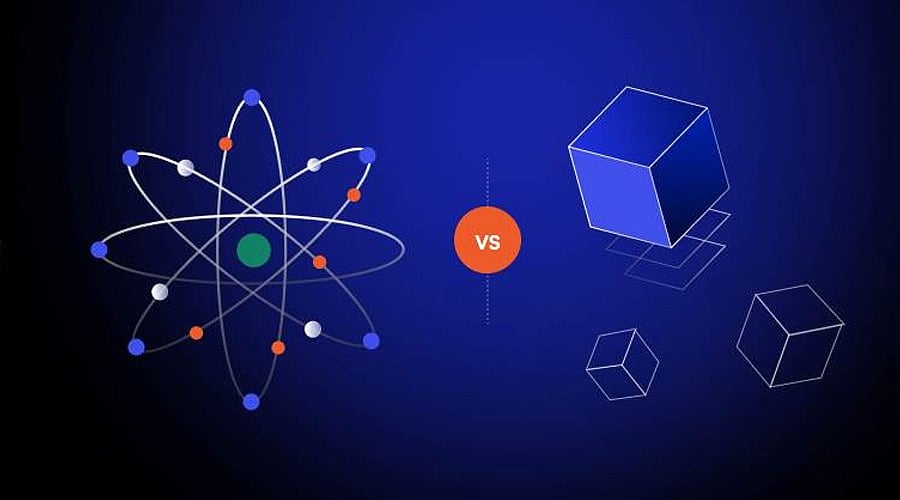
The intersection of quantum computing and blockchain security is moving from theoretical to practical concern.

How Quantum Machines Challenge Encryption

The core of the issue lies in Shor’s Algorithm. Developed by Peter Shor in 1994, this algorithm allows quantum computers to solve complex mathematical problems—the foundations of modern public-key cryptography—with unprecedented efficiency. By deriving private keys from public keys, a sufficiently powerful quantum computer could theoretically undermine the integrity of a blockchain.

  • Digital Signature Forgery: Attackers could impersonate users or vendors.
  • Integrity Compromise: Quantum attacks could potentially falsify transactions or duplicate assets.
  • Vulnerability Variance: Early 'Pay-to-Public-Key' (P2PK) addresses are more exposed than modern hash-hidden addresses.

The Reality: Timing and Preparedness

Despite the hype, experts emphasize that there is no immediate threat. Breaking current cryptographic standards requires millions to billions of stable qubits—a capacity far beyond today’s experimental quantum processors. The industry is not standing still, however. Organizations like NIST are already pushing for Post-Quantum Cryptography (PQC) standardization, and developers are looking toward quantum-resistant algorithms to fortify existing protocols.

While these developments don’t pose an immediate threat to crypto security, they signal a clear trend: quantum computing is evolving faster than many anticipated.

— Chainalysis

Key Takeaways

  • Quantum computers use Shor’s Algorithm to potentially break current public-key cryptography.
  • Current quantum hardware is not powerful enough to pose an immediate threat to major blockchains.
  • Early Bitcoin addresses are theoretically more vulnerable due to direct public key exposure.
  • Post-Quantum Cryptography (PQC) is being developed to harden blockchain infrastructure.
  • Quantum Key Distribution (QKD) is emerging as a method for secure, immune communication channels.

FAQ

Can a quantum computer break Bitcoin today?

No. Breaking Bitcoin’s current cryptographic security would require millions to billions of stable qubits, which far exceeds the capabilities of any existing quantum computer.

What is Shor’s Algorithm?

Shor's Algorithm is a quantum algorithm that can solve the specific mathematical problems underlying modern encryption much faster than a classical computer.

Are all cryptocurrency addresses equally vulnerable?

No. Early P2PK addresses expose public keys directly and are theoretically more vulnerable, while modern addresses often hide these keys behind hash functions.

What is being done to fix this?

Researchers are developing and standardizing Post-Quantum Cryptography (PQC) to transition blockchain protocols toward encryption methods that are resistant to quantum decryption.

Related Videos

Will Quantum Computing KILL Bitcoin??

CoinGecko

Could Quantum Computing Kill Crypto?

Binance

is quantum computing dangerous for crypto?

Cryptosphere

Sources