A New Mystery in Gale Crater
For over a decade, NASA’s Curiosity rover has been our eyes and ears inside Gale Crater, providing invaluable data about the history of Mars. However, a recent discovery in a region dubbed 'Valle Grande' has proven that the Red Planet still has the capacity to surprise even the most seasoned experts. The rover has uncovered a massive field of polygonal fractures—geometric shapes that look strikingly like a giant, alien honeycomb.
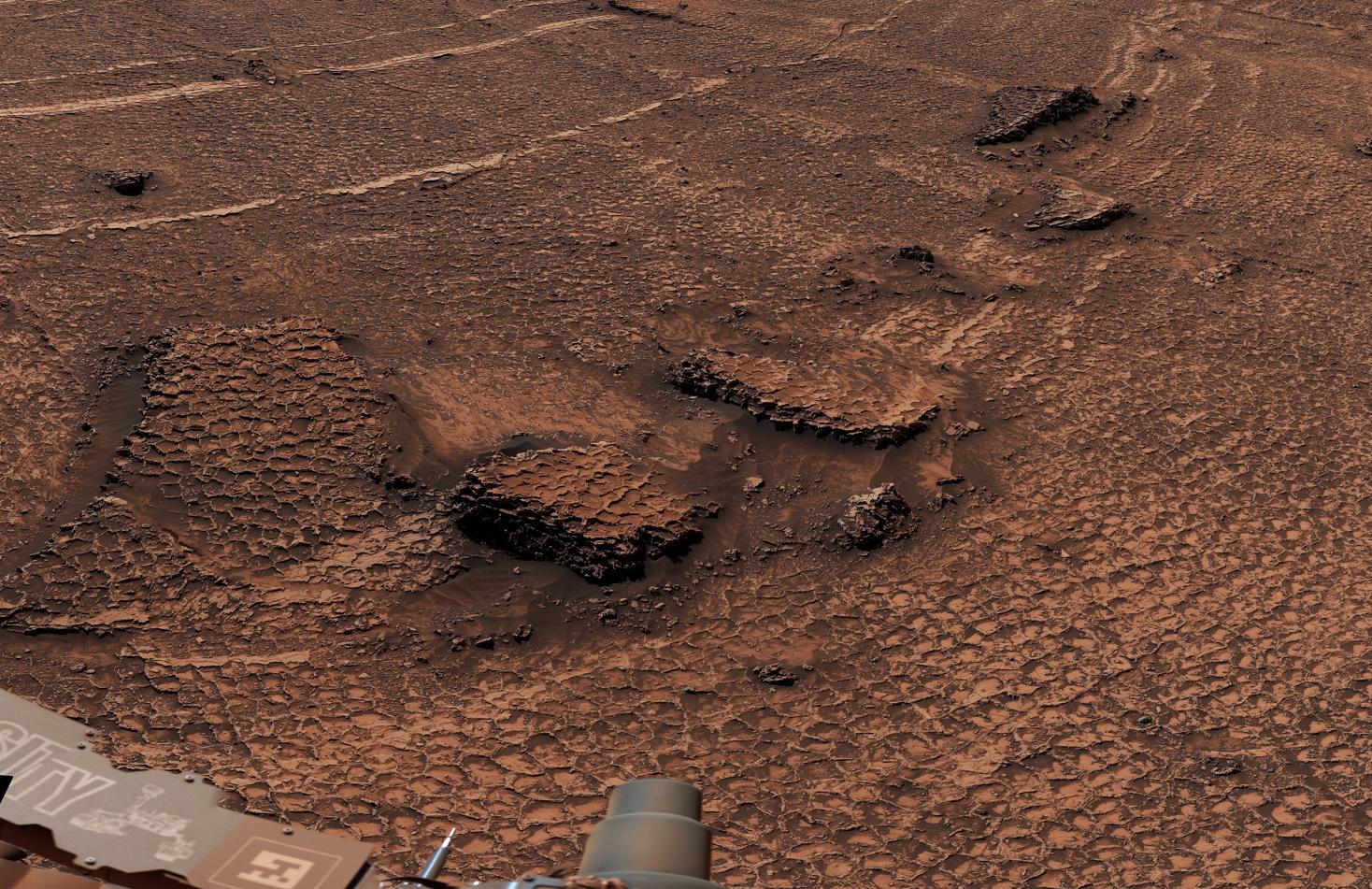
Scale Stumps Scientists
While the mission has encountered small patches of these geometric shapes before, the scale of this new find is unprecedented. Each individual 'cell' of the honeycomb measures between 1.5 to 3 inches (4 to 8 centimeters) across. The sheer density and uniform nature of the field stretching across the valley floor have left researchers puzzled as to the specific geological events that formed them.
- The formations are identified as polygonal fractures.
- Individual cells measure 4 to 8 centimeters (1.5 to 3 inches).
- The field was discovered in the 'Valle Grande' region of Gale Crater.
- Curiosity has been operational on Mars for 14 years.
What Caused the Honeycomb Effect?
The origin of these structures remains an active area of study. According to NASA, similar patterns seen in the past were often formed by mud cracks as ancient environments dried up. However, other processes could be responsible for the honeycomb texture at Valle Grande, including extreme temperature fluctuations or compression that squeezed water from sediment as the surface was buried over millions of years.
The mission has spotted small patches of these geometric shapes several times before, but nothing at the scale discovered in Valle Grande.
— NASA
Looking Toward the Future
As Curiosity continues its trek, the team plans to analyze the chemical makeup of these rocks to better understand their history. By studying whether these structures are connected to the surrounding geological features, scientists hope to piece together whether this valley was once a hospitable environment that held surface water, contributing to the broader goal of finding evidence of ancient microbial life.